
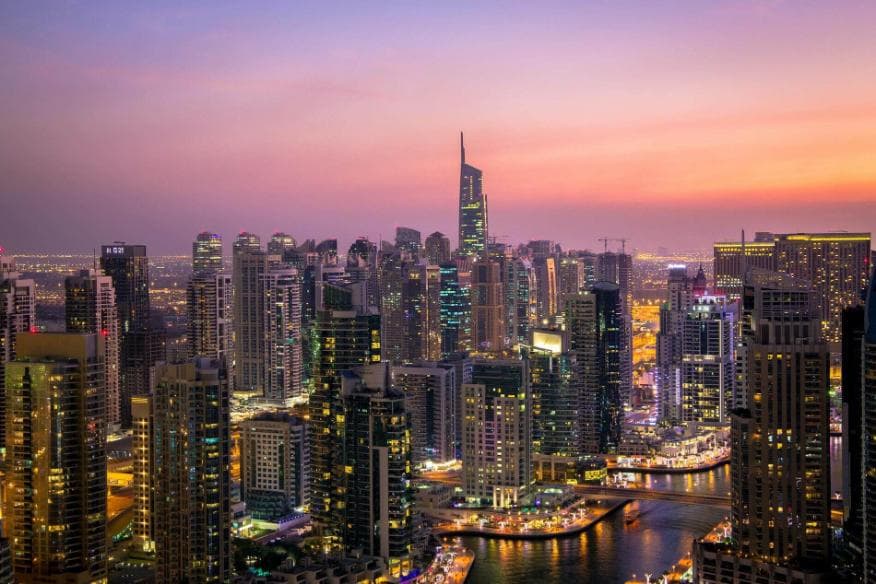

Dubai’s property market recorded AED 499.5 billion in total sales value in the first three quarters of 2025, a 33% year-on-year increase. Transaction volumes rose 21% in the same period, and average price per square foot climbed 8%. By any measure, the market is active, but activity does not distribute evenly across the city. Some neighbourhoods consistently outperform while others carry risks that headline figures obscure entirely.
Understanding what separates a strong investment location from an average one requires looking beyond postcode and price. In this blog, we’ll discuss the four variables that determine the best neighbourhoods for property investment in Dubai.
1. Consider Net Rental Yield, Not Gross
Gross yield is the figure most commonly quoted. Net yield is the one that determines actual returns. Dubai's average gross rental yields currently range between 6 to 8%, with apartments averaging 7.2% and villas averaging 4.9%, according to DXB Interact and REIDIN data for 2025. Those are strong headline numbers, but they conceal meaningful variation between neighbourhoods and buildings.
In premium locations, service charges can reach AED 60–70 per square foot annually, creating a significant gap between gross and net yield that investors in high-charge towers frequently underestimate. Mid-market communities carry lower service charges and deliver stronger net figures as a result. Areas such as JVC, Al Furjan, International City, and Arjan consistently deliver gross yields of up to 8%, while Downtown Dubai and Dubai Marina typically yield 5–6% gross, lower on income, but with a different capital appreciation profile that attracts a different investor objective.
2. Infrastructure and Connectivity
Out of all the variables that shape neighbourhood performance, infrastructure is the most consistently underpriced by investors focused solely on current yield figures.
An RTA-commissioned report executed by McKinsey & Company found a 16% increase in property values attributable to transport and infrastructure projects in Dubai, specifically in connected neighbourhoods where metro expansions reduced commute times. The mechanism is direct: better connectivity expands the pool of potential tenants and buyers, reduces vacancy periods, and sustains rental demand even when broader market conditions soften.
Properties within walking distance of Dubai Metro stations typically rent faster than comparable units without direct transit access. The upcoming AED 18 billion Metro Blue Line, 30 kilometers, 14 new stations, scheduled for completion in 2029, makes this particularly relevant for investment decisions being made today.
Areas including International City, Dubai Silicon Oasis, and Academic City, which have historically lacked direct metro access, are positioned to benefit materially from Blue Line stations, with price appreciation in these districts typically beginning well before operational launch.
- Capital Appreciation Versus Yield
Yield and capital appreciation are not interchangeable measures of performance, and the best neighbourhoods for each objective are frequently different locations. Affordable communities like JVC and Dubai Silicon Oasis consistently lead for net rental income, while premium districts like Palm Jumeirah and Downtown Dubai deliver lower gross yields but unmatched capital growth potential and resale liquidity. Both are valid investment theses for different investor profiles, holding periods, and exit strategies.
Dubai South and Expo City, according to investment property websites and analysts combining REIDIN data with Dubai 2040 Master Plan projections, represent the strongest five-year capital appreciation case in the current market. It is supported by designation as a future urban centre and proximity to the expanding Al Maktoum International Airport.
Defining the investment objective as yield, appreciation, or a balance of both before evaluating any specific neighbourhood determines which locations are even relevant to consider.
- Tenant Profile and Demand Stability
Sustainable returns depend not just on where a property is located, but also on who lives there and whether that population remains stable over time. Occupancy rates across Dubai held above 90–94% in 2025, confirming broad structural rental demand. However, tenant turnover is measurably higher in mid-range areas where renters upgrade as incomes rise, a dynamic that creates vacancy costs absent from headline yield numbers. Family-oriented communities with strong school catchments and healthcare access retain tenants across longer lease cycles, delivering more predictable net income.
Understanding the tenant profile a location serves, and whether the surrounding infrastructure supports retaining that profile over your holding period, is a variable that yield tables alone will never capture.
M&M Real Estate: Personalized Dubai Property Investment Strategy
The variables above: net yield, connectivity, supply dynamics, appreciation potential, and tenant stability are the foundation of any sound location decision in Dubai's property market. Applying them to a specific investment opportunity, within a specific financial context, is where the analysis becomes personal.
At M&M Real Estate, every client engagement begins with exactly that process. We work through the data across each of these variables before any development or neighbourhood is recommended. Our property investment services and recommendations are built around your investment objectives.
If you are evaluating the best areas to invest in Dubai in 2026, contact M&M Real Estate today to get the best consultation.
FAQs
- Which areas in Dubai have the highest rental yields in 2025?
JVC, International City, Arjan, and Dubai Silicon Oasis consistently deliver gross yields of 7-8%. Downtown Dubai and Dubai Marina yield 5-6% gross but offer stronger capital appreciation and resale liquidity for investors with a different objective.
- What is a good net rental yield for property investment in Dubai? Above 5% net is considered strong. Yields of 7–9% gross are available in mid-market communities, but service charges must be deducted to arrive at the net figure that reflects actual returns.
- What is the Dubai 2040 Master Plan and why does it matter for investors? The Dubai 2040 Urban Master Plan designates five urban growth centers including Dubai South and Expo City for sustained infrastructure investment. Areas aligned with the plan carry stronger long-term appreciation potential than those outside its development corridors.
- Is Dubai property still a good investment in 2026? Yes, with selectivity. After two years of 12–22% annual growth, appreciation is forecast to moderate to 5-8% in 2026. The performance gap between well-located, well-selected assets and generic inventory is widening, making submarket analysis more important than in previous years.
- What is the difference between gross and net rental yield in Dubai? Gross yield is annual rental income divided by purchase price. Net yield deducts service charges, maintenance, and management fees.
